The Science Behind Curiosity, Compassion, and Community to Help Us Break Free and Thrive
Mar 23, 2026
What if the reason you haven’t been able to break free isn’t because you aren’t trying hard enough but because healing was never meant to happen alone?
Many women who feel stuck are some of the hardest-working people you will ever meet. They read the self-help books. They attend counseling. They pray. They journal. They set goals and try again and again to change patterns in their lives.
Yet something still feels off.
They may find themselves repeating the same reactions, struggling in similar types of relationships, or feeling frustrated that despite all the effort they’ve invested, they still don’t feel free.
If this sounds familiar, you are not alone and more importantly, you are not broken.
Often the reason we remain trapped in patterns is not a lack of effort, but a lack of understanding about how our minds, bodies, and experiences shape the way we respond to life.
For many people, the missing piece is learning how to approach their experiences with curiosity, compassion, and support from others.
These three elements together can open the door to healing and transformation.
The Simplicity of Curiosity
In the field of psychology, there are countless models, techniques, and diagnostic frameworks designed to explain human behavior. While these tools can be helpful, they can also make the process of healing feel complicated and overwhelming.
However, research is beginning to show that one of the most powerful drivers of change may actually be something very simple: curiosity.
A paper published in Frontiers in Psychology highlights this idea by suggesting that psychotherapy can become overly complex, when in reality one of the most effective approaches is simply cultivating curiosity toward our experiences.
The authors write, “A simpler approach is to cultivate curiosity toward experience.”
When we become curious about our thoughts, emotions, and reactions instead of judging them, we begin to notice patterns that were previously operating automatically. That awareness creates the opportunity to choose something different.
Curiosity increases psychological flexibility, allowing us to step back from automatic reactions and explore what is really happening beneath the surface.
The Why–What–How Curiosity to Clarity Framework
One way to practice curiosity in everyday life is through a simple three-question framework:
Why am I feeling so activated right now?
What do I need in this moment?
How can I move forward in a way that aligns with the life I want to create?
These questions are designed to be used when your nervous system becomes activated those moments when your heart races, your chest tightens, your thoughts speed up, or your emotions feel overwhelming.
Instead of reacting automatically, this framework invites you to pause and investigate what is happening.
The first question encourages curiosity about the situation and the emotions connected to it.
The second question introduces something equally important: compassion.
Compassion Instead of Criticism
Dr. Kristin Neff, a leading researcher on self-compassion, explains that self-compassion involves responding to ourselves with the same kindness we would offer a friend who is struggling.
Unfortunately, many people have learned the opposite response.
When they feel triggered or overwhelmed, they criticize themselves.
They say things like:
“Why am I reacting this way?”
“I should be over this by now.”
“Other people have it worse than me.”
But criticism rarely leads to healing. Compassion does.
When you ask yourself, “What do I need right now?”, you begin offering yourself the support your nervous system is asking for.
That need may be simple.
You may need a few slow breaths.
A moment of quiet.
A walk to release the tension in your body.
A glass of water.
Space from a stressful conversation.
When you pause to ask what you need and then meet that need, something powerful happens.
Your nervous system begins to calm.
And when your body feels safe, your mind becomes clearer.
Clarity Creates Choice
Once the nervous system settles, the third question becomes possible:
How do I move forward from here?
This is where something many people lose when they are overwhelmed begins to return: choice.
Dr. Daniel Amen, psychiatrist and brain health expert, often describes this moment as standing at a fork in the road.
When we are triggered, our brains automatically want to go down the familiar path the reactions we have practiced many times before.
But when we pause and become curious, we begin to see the fork. We can ask ourselves:
Do I want to keep responding the way I always have?
Or am I willing to try something different?
Every choice moves us forward.
The question is whether that choice leads us deeper into patterns that haven’t been working or toward the life we truly want to create.
Curiosity allows us to experiment with new responses, and over time those responses begin to create new patterns.

Why Community Matters
While curiosity and compassion are powerful tools, there is another element that plays an essential role in lasting healing: community.
Trauma often becomes stuck in the mind and body when we do not have the support to process difficult experiences.
When painful events happen and we do not have someone safe helping us make sense of them, our nervous system stores those experiences in survival mode. The brain learns patterns designed to protect us, but those same patterns can keep us trapped.
Instead of responding from clarity, we react from survival.
Supportive relationships help interrupt that cycle.
Science explains that our nervous systems regulate in relationship with other people. This process is known as co-regulation.
When we are around safe, supportive individuals, our nervous system begins to calm. Hormones associated with connection and safety increase, allowing the brain to process experiences that were previously stuck.
Healing often happens in the presence of people who provide safety, understanding, and encouragement.
Researcher Brené Brown describes vulnerability as the courage to be seen.
When we share our stories in safe spaces, connection grows. And connection is one of the most powerful forces for healing.
This is why community can be such an important part of transformation.
We were never meant to walk through healing alone.
Moving Toward the Life You Were Created to Live
Curiosity helps us notice patterns.
Compassion helps us respond with kindness instead of shame.
Community provides the support that allows deeper healing to take place.
Together, these elements create the foundation for breaking free from survival patterns and moving toward a life of purpose and fulfillment.
You may simply need the right tools and the right support.
An Invitation for Your Next Step
Through It’s Your Story to Tell, we have created resources designed to support women who are ready to break free from the patterns that have been holding them back.
Inside the Transformation Academy, you will find free resources including courses, workshops, book and Bible studies, and group coaching opportunities designed to help you explore your story, calm your nervous system, and move forward with clarity.
These resources were created because healing should not be limited to those who have the financial ability to access support.
If you feel a desire for something more in your life more freedom, more clarity, more purpose—this may be the next step in your journey.
You can explore the free resources available through the Transformation Academy by visiting It’s Your Story to Tell.
Because the life you were created to live is still possible.
And your story is still being written.
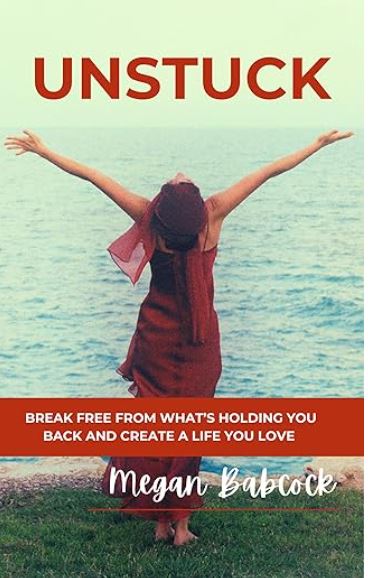
If you want to go even further in your journey, my book Unstuck: Break Free from What’s Holding You Back and Create a Life You Love walks step by step through the process of recognizing patterns, healing past wounds, and creating the life you truly desire.
View The Entire Collection
See all our blog posts to discover valuable insights and tools for navigating trauma and healing with guidance and support.