When Faith Isn’t Enough to Stop Anxiety
Aug 24, 2026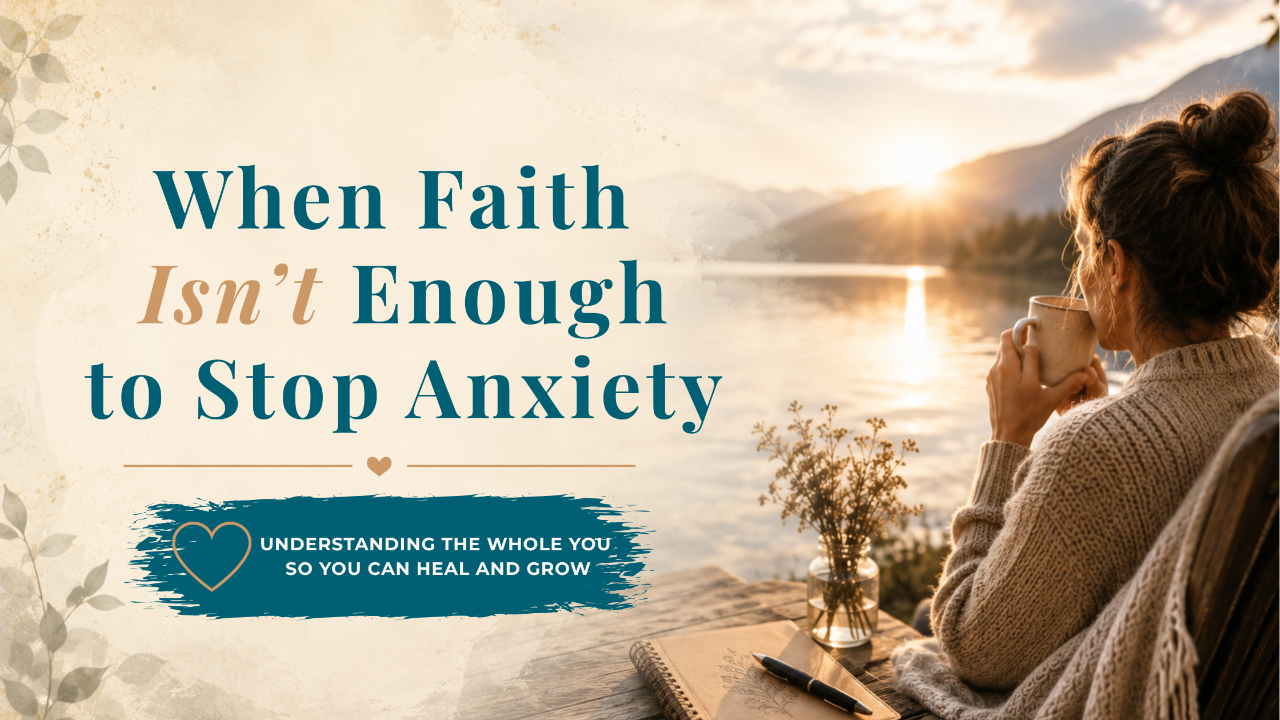
Why Christians Can Love God, Know Scripture, and Still Struggle With Anxiety, Trauma Responses, Emotional Regulation and Feel Stuck.
What if the anxiety you’ve been praying away isn’t evidence that you need more faith? What if the emotional reactions you keep regretting aren’t simply a lack of self-control but an invitation to understand what is happening beneath the surface?
For many Christians, struggling with anxiety, emotional overwhelm, or repeated patterns can carry an additional layer of shame.
We know we’re supposed to trust God.
We know what Scripture says about fear.
We know the fruit we want our lives to produce.
So when anxiety, anger, defensiveness, shutdown, people-pleasing, or other patterns continue showing up, it can be easy to arrive at a painful conclusion:
Maybe I’m just not doing faith very well.
Sometimes the messages we receive from other believers reinforce it.
Pray harder.
Have more faith.
Take your thoughts captive.
Give it to God.
Those things aren’t necessarily wrong.
Prayer matters. Faith matters. Scripture matters. Renewing our minds matters.
But what if we’ve sometimes offered people the right spiritual truth without understanding the whole person who is trying to receive it?
You Are More Than a Spiritual Being
God didn’t create us as spirits disconnected from bodies, brains, emotions, relationships, and experiences. All of these parts interact.
Something that happened years ago can influence how your nervous system responds to something happening today.
You can consciously know: I am safe.
And still feel your heart racing.
You can know: I don’t need to defend myself.
And hear yourself becoming defensive.
You can believe: My worth comes from God.
And still feel devastated when someone rejects you.
You can know: I should set a boundary.
And find yourself saying yes again because disappointing someone feels unbearable.
We can know something in our head and not believe it in our heart. Experiencing this may mean there is something happening beneath the behavior that deserves our curiosity.
Knowing What to Do and Having the Capacity to Do It Are Different
This distinction changed so much for me.
For years, I knew many of the “right” answers.
I loved Jesus.
I knew Scripture.
I wanted my life and relationships to reflect my faith.
But there were emotionally intense moments when I couldn’t seem to access what I knew.
I would fall back into familiar patterns.
People-pleasing.
Perfectionism.
Overfunctioning.
Defensiveness.
Shutting down.
Trying to control an outcome.
Then afterward, I would look at my response and wonder: Why did I do that again?
Understanding trauma and the nervous system helped me recognize something important:
Knowing how I want to respond doesn’t automatically mean I have developed the capacity to respond that way when I’m activated.
When our brains perceive threat, learned survival responses can happen quickly.
And sometimes what our nervous system identifies as threatening isn’t based only on what is happening now. It can also be influenced by what it learned before.
That doesn’t remove our responsibility for our behavior. It gives us information that can help us change it.
Spiritual Bypassing Can Keep Us From the Root
There was a time when I thought pressing forward was evidence of faith.
Something hurt?
Keep going.
Feeling overwhelmed?
Pray.
Something from the past resurfaced?
Focus on the positive.
Relationship falling apart?
Trust that God works everything together for good.
Again, none of those truths are inherently wrong.
The problem is how we can sometimes use them.
Instead of allowing God’s truth to lead us into the places that need healing, we can use it to avoid them.
That’s an important distinction.
We can trust Romans 8:28 while still grieving.
We can trust God while admitting we’re scared.
We can forgive someone while acknowledging that what happened hurt us.
We can believe God is our healer while receiving help from a counselor, physician, psychiatrist, coach, or another appropriately trained professional.
Faith doesn’t require us to pretend.
Healing often requires us to become willing to tell the truth about what is happening.
Your Emotions Are Not Your Enemy
For many of us, emotions were treated as something to control, suppress, distrust, or get over.
But what if we became curious about them instead?
Think about the warning lights in your car.
When the oil light comes on, you don’t shame the dashboard.
You don’t cover the light and keep driving.
The light is giving you information.
Our emotions can do something similar.
Anxiety might tell us that our system perceives uncertainty or threat.
Anger might alert us to a boundary violation, injustice, hurt, fear, or unmet need.
Sadness might tell us that something mattered.
Overwhelm might signal that we’ve exceeded our current capacity.
That doesn’t mean every emotion accurately describes reality, and it doesn’t mean every emotion should determine our behavior.
Emotions are information, not instructions.
We can notice them without allowing them to lead us.
And when we become curious instead of ashamed, we have a better opportunity to understand what is happening underneath them.
Regulation Creates Space for Choice

This is where understanding our nervous system becomes incredibly practical.
When I’m highly activated, that probably isn’t the best moment to send the text, make the decision, confront the person, or solve the entire problem.
Sometimes the most productive thing I can do is pause.
Breathe.
Notice what is happening in my body.
Allow myself to settle.
Then get curious.
Why am I feeling so activated?
What do I need right now?
How do I want to move forward in alignment with who I am becoming?
Regulation isn’t about never feeling strong emotions.
It’s developing the capacity to experience those emotions without automatically allowing them to determine what happens next.
And this matters far beyond our individual healing.
Because our ability to regulate ourselves affects the people around us.
We Cannot Lead Well From Wounds We Refuse to Acknowledge
This applies to pastors.
Parents.
Ministry leaders.
Coaches.
Teachers.
Healthcare professionals.
Business leaders.
Anyone with influence.
Having a calling doesn’t mean we’ve healed every wound.
Being gifted doesn’t automatically make us emotionally mature.
Knowing Scripture doesn’t mean our attachment patterns disappear.
And having authority doesn’t prevent unresolved experiences from influencing how we use that authority.
If I don’t understand my own fear of rejection, I may interpret disagreement as disrespect.
If I haven’t addressed my need for validation, I may become dependent on the approval of the people I lead.
If conflict activates something unresolved within me, I may become defensive when someone brings a legitimate concern.
If I learned that emotions were weakness, I may unknowingly shame someone who comes to me overwhelmed.
We can sincerely want to help people and still hurt them when we don’t understand what is happening within ourselves.
That’s why self-leadership matters.
The work we do within ourselves affects the safety we are able to create around us.
What If We Changed the Question?
When someone’s life isn’t producing the fruit we expect, it’s easy to look at the behavior and ask: What’s wrong with you?
Why can’t you stop?
Why do you keep choosing these relationships?
Why are you still anxious?
Why can’t you forgive?
Why don’t you trust God?
Why are you still struggling with this?
But there is another question that can open an entirely different conversation: What happened to you?
And perhaps another: What is happening within you now?
Those questions don’t excuse harmful behavior.
Understanding trauma should never require someone to remain in an abusive or unsafe relationship.
Compassion doesn’t eliminate accountability.
Boundaries still matter.
Responsibility still matters.
But understanding someone’s story can help us identify the appropriate response.
If we misunderstand the problem, we may continue giving people solutions that never reach the root.
The Church Has an Incredible Opportunity
I believe the church has an incredible opportunity in this area.
People walk through church doors carrying grief, childhood trauma, addiction, relationship wounds, anxiety, depression, family dysfunction, shame, and experiences they may never have told another person.
They are looking for hope.
The church doesn’t need to become a mental health clinic to respond better.
Pastors don’t need to become psychiatrists.
Small-group leaders don’t need to become therapists.
But what if we became better equipped to recognize when someone needs additional support?
What if churches developed relationships with trusted mental health professionals?
What if leaders learned more about trauma responses, emotional regulation, attachment, and healthy boundaries?
What if we created spaces where someone could say: “I’m struggling.”
Without immediately wondering whether everyone would question their faith?
What if churches became places where Scripture, prayer, community, appropriate professional support, emotional health, and practical skills could work together?
There are churches on corners throughout our communities.
Imagine the impact if more of them became places where hurting people encountered both truth and understanding.
Healing Isn’t Becoming Less Spiritual

For some people, receiving mental health support may initially feel like admitting spiritual failure.
I would challenge us to see it differently.
What if learning how your brain and nervous system work increases your awe for the God who created them?
What if understanding your emotional patterns helps you recognize the places where God is inviting you to grow?
What if counseling helps uncover a belief you’ve carried for decades so that you can finally examine it against truth?
What if becoming more emotionally regulated allows you to demonstrate more patience with your children?
More compassion toward your spouse?
More humility when you’re corrected?
More self-control when you’re angry?
More courage when God asks you to do something uncomfortable?
Then emotional healing isn’t competing with spiritual formation.
It may be part of it.
We don’t have to choose between faith and mental health.
We can become people who pray and process.
Who trust God and ask for help.
Who know Scripture and become curious about our patterns.
Who extend grace and maintain boundaries.
Who take responsibility for our behavior without carrying shame about needing support.
Because the goal isn’t simply to appear spiritually healthy.
The goal is transformation.
And as we become healthier and more integrated ourselves, we increase our capacity to help the people God has entrusted to us to do the same.
What If the Next Level Requires New Capacity?
There is one more possibility worth considering when anxiety, overwhelm, or discomfort begins showing up.
Maybe you’re growing.
We often interpret discomfort as evidence that something is wrong.
Maybe you’ve already done years of healing work. You’ve gone to counseling. You’ve learned the tools. You’ve broken patterns you once thought you would carry forever.
Then a new season begins, and suddenly you feel activated again.
It can be discouraging.
I thought I already dealt with this.
Why am I struggling again?
Why isn’t what worked before working now?
But what if you haven’t gone backward?
What if you’ve simply reached the edge of your current capacity?
Sometimes the skills that carried us through one season aren’t enough for where God is taking us next.
A new opportunity may require greater confidence.
A leadership role may expose places where criticism or rejection still activates us.
A healthier relationship may challenge patterns that felt normal in unhealthy ones.
A bigger assignment may require stronger boundaries, deeper trust, greater emotional regulation, or a new level of dependence on God.
There are moments when growth requires us to learn something new.
Instead of immediately thinking, Why am I anxious again?, we can become curious:
What is this season requiring from me that the last one didn’t?
Maybe I need another skill.
Maybe I need support.
Maybe there is another layer that needs healing.
Maybe I need to increase my capacity before I can sustainably carry what is ahead.
That isn’t failure.
That’s growth.
Scripture tells us that we are being transformed “from glory to glory” (2 Corinthians 3:18). Transformation is ongoing.
There may always be another invitation to grow.
Another place to surrender.
Another pattern to notice.
Another skill to develop.
Another opportunity to become more aligned with the person God is calling us to be.
So when anxiety, activation, or overwhelm shows up, instead of immediately judging it, perhaps we can pause long enough to ask:
Is something from my past being activated, or is this season revealing a new area where I need to grow?
Sometimes it may be both.
Either way, curiosity gives us somewhere to begin.
Because going to the next level doesn’t mean we should no longer need help.
Sometimes going to the next level means developing the capacity to carry what God is asking us to carry there.
Continue the Conversation
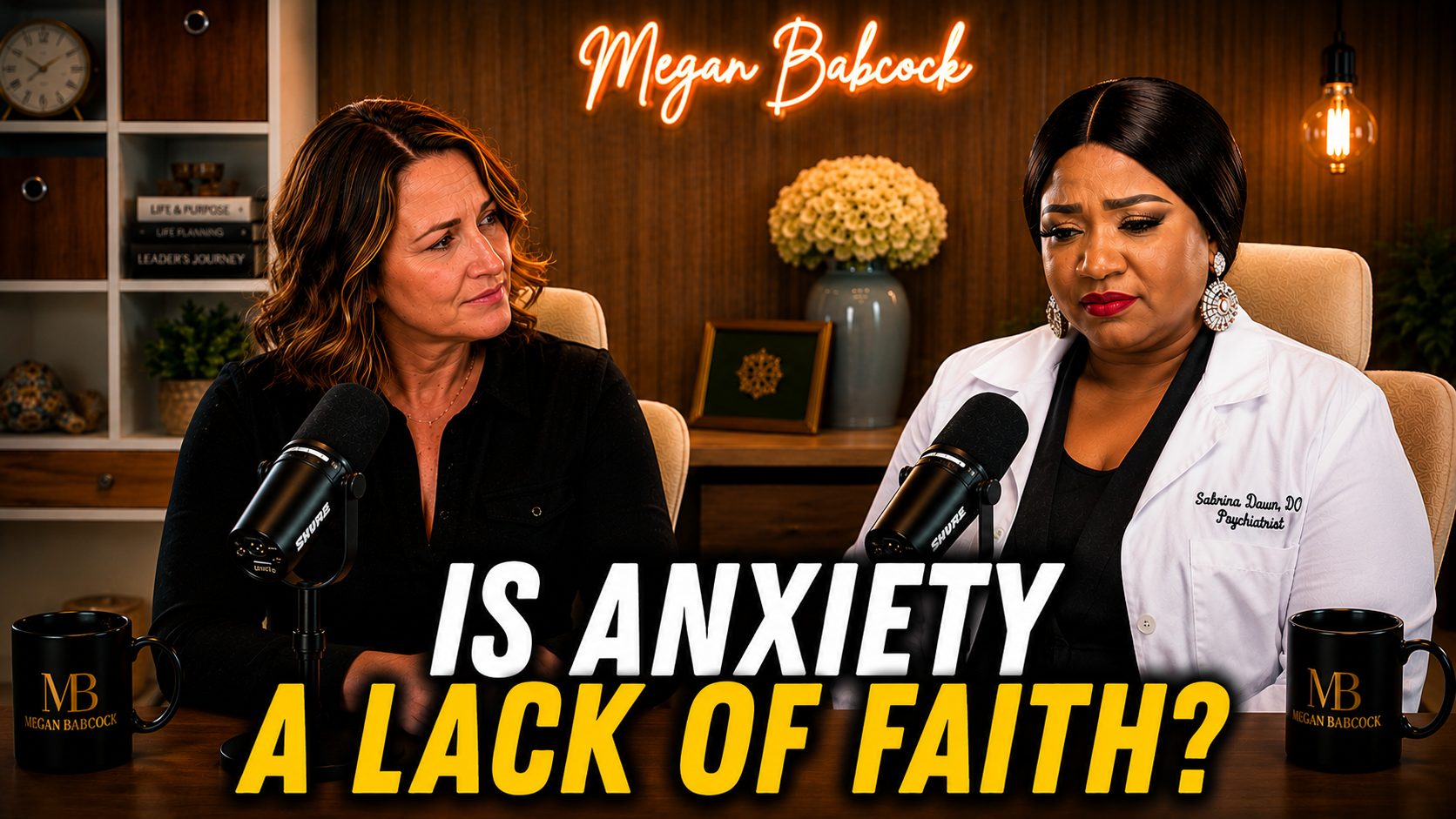
If this has challenged the way you think about faith, anxiety, trauma, emotional regulation, mental health, leadership, or the role of the church in healing, I invite you to watch my two-part conversation with faith-based psychiatrist Dr. Sabrina Gunn, author of The Regulated Church: Trauma, Attachment, and Kingdom Alignment.
Part One: Is Anxiety a Lack of Faith? explores faith, mental health, trauma, and nervous system regulation.
Part Two: Can the Church Become Trauma-Informed? looks at how we can apply this understanding in our churches, leadership, families, and communities.
I hope you’ll join us for both parts of this important conversation.
View The Entire Collection
See all our blog posts to discover valuable insights and tools for navigating trauma and healing with guidance and support.